


Perfect your Pole Presentation and be Ready to Dance!
Whether you’re starting pole classes for the first time or preparing for club dancing, having the right gear makes a real difference. Proper equipment helps you move confidently, reduces injury risk, and lets you focus on learning technique instead of fighting discomfort.
From pole shoes to protective gear, preparation matters — especially for beginners.
Essential Pole Dancing Gear for Beginners
Before your first lesson, there are a few non-negotiables most beginner pole dancers should have:
- Pole dancing shoes
- Comfortable socks
- Fitted, flexible clothing
- Knee pads Hair ties or secure hair accessories
These basics are suitable for most beginners, regardless of whether you’re training for fitness, performance, or club work. Always check with your studio or instructor beforehand, as requirements can vary.
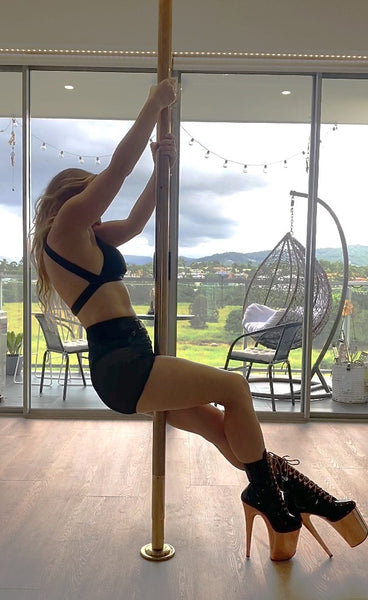
What Pole Dancing Shoes Should Beginners Wear?
Shoes are one of the most important decisions for beginner pole dancers.
Most dancers train in platform heels, as this is what you’ll commonly see in classes and performances. If you’re new to heels or height, starting with a lower heel and platform is the safest approach. You can gradually increase height as your balance and confidence improve.
Some beginners prefer:
-
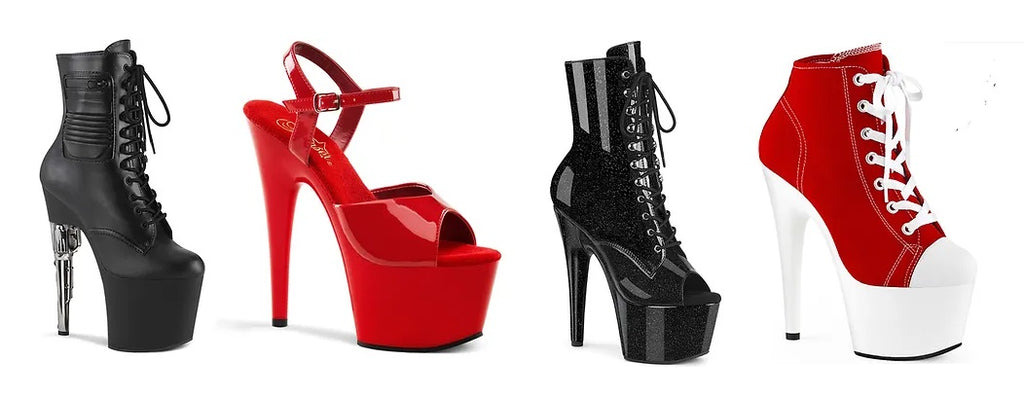
Platform ankle boots for added ankle support and a secure fit
-
Platform sandals once balance improves, though these require more control
If heels feel intimidating at first, practicing in non-platform high heels can help you get used to balance before moving into full pole shoes.
Well-known pole shoe brands like Pleaser and Hella Heels are popular because they’re designed specifically for stability, fit, and performance.
What Clothing Should Beginner Pole Dancers Wear?
Pole dancing requires skin contact for grip, so clothing choice matters.
As a beginner, aim for:
-
Tight-fitting, flexible clothing
-
Breathable fabrics suitable for intense movement
-
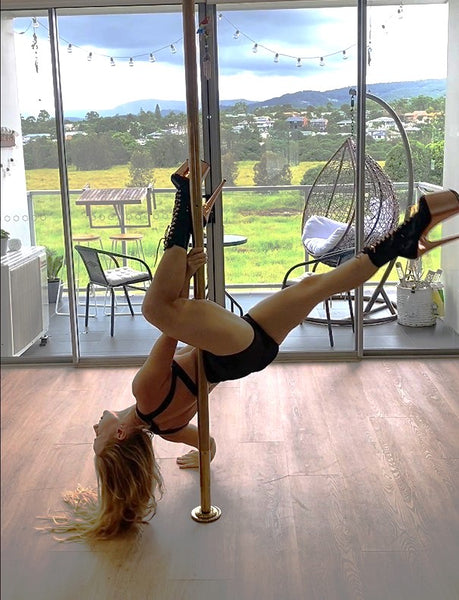
Shorts rather than leggings to allow leg grip
Workout shorts and fitted tops work well for most classes. Secure your hair fully before class — loose hair can interfere with movement and become a safety issue.
If you’re unsure, ask your instructor what they recommend for your specific class.
Extra Items Worth Keeping in Your Pole Bag
Beyond the basics, a few extra items can make training safer and more comfortable:
-
Socks for breaking in new shoes or preventing blisters
-
Soothing balm for feet and pressure points after training
-
Shoe protectors to reduce toe wear during floorwork
-
Knee pads to protect against bruising while learning new moves
-
Elbow pads for routines involving floor transitions
These items aren’t mandatory, but most dancers add them over time based on experience.
Final Thoughts
Preparing properly as a beginner pole dancer isn’t optional — it’s how you avoid injury, progress faster, and build confidence.
Choosing the right shoes, wearing functional clothing, and protecting your body allows you to focus on technique and performance instead of discomfort. When you feel stable and secure, learning becomes easier and confidence follows naturally.
Preparation sets the foundation. Everything else builds on it.


